Event 1
Trevor Walcott Halloween Party Conflict
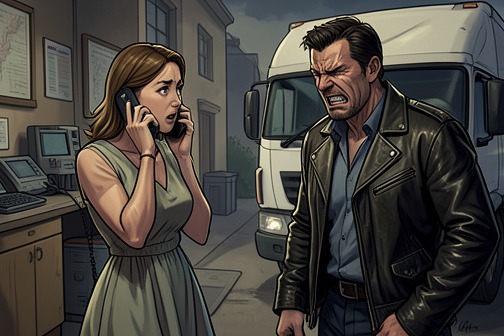
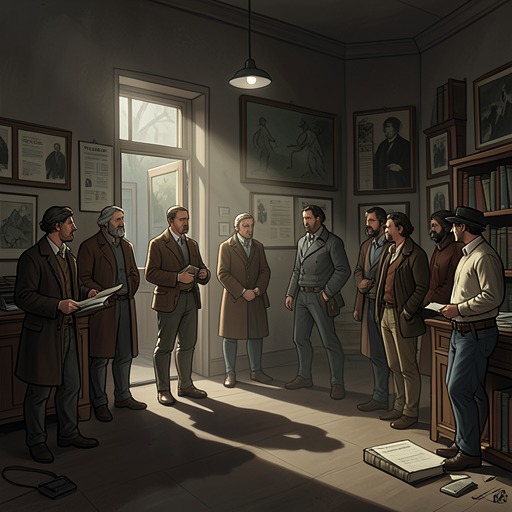
The [Trevor Walcott Halloween Party Conflict](entity:event-recall-event-trevor-walcott-ef12ad752723) is a remembered confrontation in which [BB Easton](entity:character-recall-character-bb-easton-83d7cb4941b8)’s attempt to end her relationship with Ronald McKnight collides with the fear of his retaliation. At Trevor’s crowded party, a breakup note proves no shield against the arrival of Ronald’s monster truck; the immediate danger, however, comes from Angel Alvarez, the woman who had been cheating with him. Ronald ultimately pulls Angel away, turning a scene BB expects to end in violence against her into a narrow, startling escape.
## Background and Stakes
By the time of the party, BB was frightened of Ronald and desperate to leave him. He had begun taking steroids a few months earlier and had become much larger and, in her view, persistently irrational. The account places that physical change against an already frightening reputation: BB believed that a breakup could put her at risk of being killed. After the dramatic Halloween-party incident, she felt she urgently needed a new boyfriend, but at this point the prospect of leaving Ronald safely mattered more than simply choosing someone new.
Trevor, a new student, had invited a large crowd to a party at his home. His single mother had permitted the gathering while trying to compensate for leaving Trevor’s father and moving her son to a new school in the middle of the year. BB was strongly attracted to Trevor, whose guyliner, black hair and fingernails, and bedroom covered with posters for *The Crow* and Nine Inch Nails formed part of his dark, mysterious image. She intended to have sex with him at the party, but remained technically involved with Ronald and feared what he might do if she ended the relationship in person.
## The Breakup Note and Ronald’s Arrival
BB devised a way to make the breakup precede any possible encounter with Trevor: she left a note for Ronald with his mother on the way to the party. She reasoned that, if the note reached him, she and Ronald would already have been separated for hours by the time anything happened with Trevor. The plan offered a paper record and a sense of protection, but not an actual confrontation or confirmation that Ronald had received the message. BB later joked that she had made a lawyer’s case airtight; the scene’s outcome makes the confidence in that calculation look fragile.
She had barely been at the party long enough to finish the watered-down drink in her plastic cup when she heard the distinctive roar of [Knight’s monster truck](entity:object-recall-object-knight-s-monster-truck-c35375a56d99) approaching. The vehicle’s growing rumble froze her in place. In BB’s recollection, the headlights came around the corner and bore down on her, and the approach seemed to compress into a sequence of still images. The party’s ordinary social setting—the cul-de-sac, teenagers, and drink in hand—was suddenly recast as a place of imminent danger.
## Angel’s Charge and Ronald’s Intervention
The monster truck entered Trevor’s teenager-filled cul-de-sac and opened its passenger door before coming to a full stop. Angel flew out, calling BB’s name and flailing her arms. BB knew Angel as the person with whom Ronald had been cheating, so the sight produced a sharp contradiction: BB feared Ronald’s arrival, yet Angel appeared to be the one rushing to attack her. BB’s body stayed rigid as Angel came closer, and Angel toppled over the curb and landed at BB’s feet before BB could move.
The danger did not end with the fall. Angel’s kicking, thrashing body rose and moved backward through the air, an image BB compares to a nightmare being rewound. Only when she saw Ronald’s silhouette did she understand what had happened: he had lifted Angel from the driveway and was forcing her back into the truck before she could lunge at BB again. The same person whose arrival had made BB fear for her life was, in that instant, the person stopping Angel from reaching her. The reversal is central to the incident’s tension; BB cannot initially interpret the scene, and her survival becomes clear only as Ronald wrestles Angel into the high cab.
## Aftermath and Narrative Consequence
As the truck drove away, BB gradually realized she was not going to die. Once she could move her arms, she threw her plastic cup to the ground and shouted, “What the fuck was that, Angel?” The gesture and outburst mark her return from paralysis, but do not make the encounter harmless: BB recalls trying to act as though she had not urinated from fear. She describes Angel as physically formidable and imagines that she would have been badly hurt if Ronald had not intervened. Her description of that intervention as divine protection carries comic force, but also registers how little control she felt she had over the danger.
The confrontation also complicates BB’s immediate romantic plans. She had hoped Trevor would be a possible escape from Ronald, but later discovered that the antidepressants he took made him unable to ejaculate. After hearing about the incident, a girl in BB’s social studies class noticed her shaved head, combat boots, and desperation, then told her that Harley James was staying temporarily at his mother’s nearby home. The girl gave BB his mother’s number with a sad smile. BB initially took the expression as pity for her situation; in retrospect, she understood it as guilt for introducing her to what she calls a disappointment. The party thus serves both as a frightening escape from an anticipated attack and as the point from which BB’s rebound pursuit of Harley begins.
## Significance of the Scene
The episode turns on the gap between BB’s attempted control and the events that overtake her. A note left with a parent seems to make the breakup safely complete, yet the truck’s arrival overwhelms that small act of planning. Then the apparent attack by Angel gives way to an unexpected rescue by Ronald. BB’s fear is not resolved through a carefully negotiated separation: it is interrupted by a physical struggle that leaves the relationship and its dangers unsettled, even as she escapes this particular moment unharmed.
The scene’s grotesque physical comedy—BB frozen in place, Angel falling at her feet and then being hauled backward, and the plastic cup thrown after the truck—does not erase its stakes. Instead, the comic retelling holds panic and absurdity together. Its immediate consequence is a change in BB’s search for a boyfriend: Trevor proves sexually unavailable to her, and the classmate’s introduction points her toward Harley James. The party is therefore both a narrowly survived confrontation and a hinge between relationships.
Event 2
BB and Harley James’s First Date
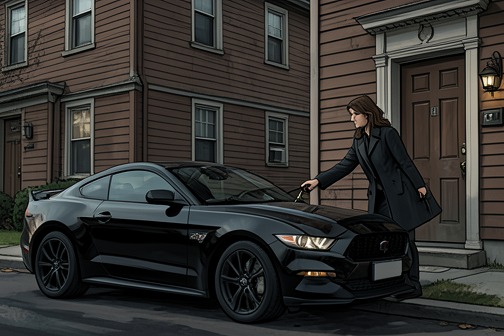
[BB and Harley James’s First Date](entity:event-recall-event-bb-harley-james-c3bcdec12b4a) marks a shift from treating Harley James chiefly as a possible shield against Ronald McKnight to finding his company genuinely appealing. The date begins under the sign of performance and protection: [BB Easton](entity:character-recall-character-bb-easton-83d7cb4941b8) arrives at Harley’s home imagining how McKnight might perceive them together. About an hour into their coffee outing, however, the image BB had constructed gives way to an unexpectedly comfortable impression of Harley himself.
## Arrival and First Impression
BB reaches the date in a black Mustang hatchback that is new to her but nearly old enough to vote. She lurches it onto the curb and has to make herself release the steering wheel, a small moment that frames the visit as an undertaking requiring resolve. At the door, her attention fixes on the awkwardness of the greeting: she watches a black fingernail extend from her body to ring the bell, then wonders whether meeting Harley might require some secret knock or handshake. The comic overthinking gives way to the person who answers.
Harley appears at his mother’s run-down, 1970s-style, brown tri-level house. His messy blond pompadour, blue eyes, full lips, and self-assured expression make him look strikingly like Billy Idol to BB. That resemblance matters less as a celebrity comparison than as an immediate point of familiarity: it softens her sense that Harley is unapproachable and puts her at ease. The date thus begins with two opposite impressions in quick succession—her uncertainty at the threshold and the comfort produced by a recognizable image.
## The Protective Idea Behind the Date
BB goes for coffee despite her doubts. In her imagined scenario, McKnight would see her with Harley from at least twenty-five yards away, while a coffee mug concealed the lower half of Harley’s face. The distance and partial concealment are essential to the fantasy: BB pictures not intimate knowledge of Harley, but the public effect of being accompanied by a handsome, grown man who could deter a bully. She even imagines Harley confronting McKnight if necessary. The protective role she assigns him precedes any real understanding of his character.
That plan reflects how recently McKnight’s abuse still weighs on BB. She acknowledges that her expectations for the afternoon are low, and her initial reservations include Harley’s teeth and intelligence. Her imagined benefit is consequently practical and strategic: being seen with Harley might change how McKnight regards her. Yet the actual date will not remain inside that calculation. As BB spends time with Harley, the possibility that he might serve as a counterweight to McKnight becomes only one part of what makes him appealing.
## A Change in the Date’s Meaning
About an hour into the outing, BB realizes that she is beginning to like Harley. His appearance still evokes a punk-rock image, and his voice strikes her as rough and distant, but those features contrast with an easygoing, friendly, and cheerful manner. Instead of confirming her first doubts, Harley’s relaxed disposition becomes the date’s decisive discovery. BB finds it unexpectedly familiar, connecting it to the affectionate, pot-smoking, Woodstock-era hippies who raised her.
The contrast changes the emotional direction of the encounter. BB had arrived asking, in effect, what Harley could do for her in relation to McKnight; now she is responding to how he makes the date feel. Her assessment moves from low expectations to a sense that his calmness might be compatible with care and protection. The possibility of a confrontation remains part of her thinking, but it no longer exhausts her interest in him. The same man who first seemed difficult to approach now feels comfortable company.
## Significance and Limits
By the end of the account, BB imagines Harley as someone who would not hurt her and might cherish and protect her. These are her hopeful conclusions during the date, not established facts about what follows. The distinction matters: the scene records the force of her impression, rather than proving that Harley will fulfill the role she gives him. Her confidence is built from his pleasant manner, the familiarity of his temperament, and the protective image she had already projected onto him.
The date therefore joins a strategic motive to a genuine emotional opening. BB initially considers Harley in relation to McKnight and the reassurance of being seen with a formidable-seeming man; she ends the afternoon considering Harley in his own right. That shift lays the groundwork for her rebound relationship with him without resolving its future. The event’s significance lies in this first change of emphasis: protection brings BB to the encounter, but Harley’s affability makes her want to continue beyond the plan she had imagined.
Event 3
The Eeyore Tattoo Reveal and BB and Harley’s Breakup
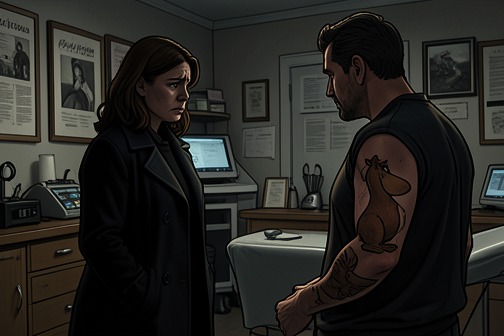
[The Eeyore Tattoo Reveal and BB and Harley’s Breakup](entity:event-recall-event-eeyore-bb-harley-8ed84776bbf4) transforms [BB Easton](entity:character-recall-character-bb-easton-83d7cb4941b8)’s excited expectation of being commemorated in Harley James’s tattoo into a rejection that ends their relationship. After BB spends weeks drawing designs for him, she rushes to the tattoo parlor expecting to see one chosen; instead, she finds Eeyore covering much of Harley’s upper arm. The mismatch between the permanent image she imagined and the one he selected makes the tattoo the scene’s turning point: it takes the place of her likeness, and she leaves convinced she is done with him.
## The Promise of a Tattoo
For weeks, Harley asks BB to draw tattoo designs. She produces about twenty-five possibilities, among them sad-clown, sugar-skull, Bettie Page, bionic-angel, and gutter-punk versions of BB. Harley studies the details closely, showing a sustained interest that surprises her. To BB, the attention means more than choosing artwork: she takes his investment in the drawings as evidence that he loves both her and her art enough to carry them on his body forever. The permanence she imagines gives the project its emotional charge.
That expectation grows amid the ordinary labor of getting Harley home from work. He is employed at an auto-body shop about half an hour from his house but has no car, so BB often drives him. After school, she picks at dinner, lies to her parents about where she is going, and sets off to collect him. The pattern makes her the person who facilitates his trips home, while also requiring concealment from her family. When she calls to ask whether he needs a ride, he tells her to come to the tattoo parlor instead. BB immediately reads the change of destination as proof that the long-anticipated tattoo is happening.
## The Reveal at Terminus City
BB hurries to Terminus City in her Mustang, giddy and impatient. Her entrance is so forceful that the small silver bell above the parlor door swings into the drop-tile ceiling, dislodging plaster onto a ripped red vinyl waiting-room chair. The damage briefly turns her excitement into part of the room’s physical disorder. The parlor itself appears to have once been a tanning salon: its lobby narrows into a long hallway lined with doors, and the buzzing tattoo machine leads her toward the one open room.
Inside, BB finds Harley shirtless in a semi-reclined chair while a large tattoo artist works on his upper arm with a buzzing needle. Harley appears placid and does not flinch. BB initially reads his stillness as extraordinary toughness, but her retrospective account offers a less flattering possibility: he may have taken a fistful of Vicodin with Listerine. He greets her warmly and waits for a hug. She gives him a quick embrace, then tries to move around the tattoo artist, whose body blocks the view she has come to see. Her outward effort to stay quiet in the humming room contrasts with her barely contained need to discover which drawing Harley selected.
The reveal is Eeyore, the depressed donkey from Winnie-the-Pooh, with a little pink bow on his backside. The image covers nearly half of Harley’s upper arm and occupies the place where BB imagines her own face might have gone. That substitution is the emotional center of the event: she had understood the designs as a promise of lasting intimacy, but Harley has chosen a different figure, one connected to his own nickname. He explains that people call him Eeyore because he speaks slowly, imitating the character’s drawn-out complaint about his tail. To him, the tattoo makes sense as a joke about himself; to BB, it demonstrates that her imagined place on his body—and the meaning she had attached to the project—was never realized.
## The Break and Its Meaning
BB’s response is immediate. She glares at Harley, who appears oblivious to her fury, and concludes that she is finished with him. She does not describe a discussion, a negotiated separation, or a later reconciliation in this episode. Instead, the break is conveyed through her decisive internal judgment and her hurried departure. She does not know how Harley gets home that night; in her rush to leave, she damages the already crumbling ceiling at least once more. The second burst of physical disorder echoes her entrance, but now the energy is not joyful anticipation. It accompanies her exit.
The tattoo works as both the literal object at the center of the scene and the material form of BB’s disappointed expectation. She had helped create a range of images and believed Harley’s close attention meant that their relationship would be inscribed in his body. What she finds is a permanent portrait of a character associated with him, not her. The scene therefore turns on a sharp reversal: the same trip she imagined as the culmination of romantic recognition becomes the moment she rejects the relationship. Her account’s vivid focus on the buzzing machine, the blocked view, the donkey’s sad eyes, and the plaster falling from the ceiling gives the breakup a concrete setting, while her final judgment makes clear that the revelation changes how she sees Harley and what she had hoped the tattoo would mean.
Event 4
Ken Reads the Journal and the Marital Behavior Experiment Begins
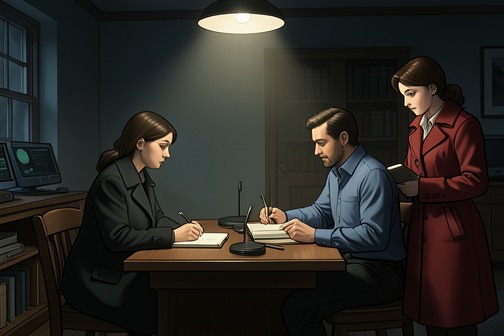
[Ken Reads the Journal and the Marital Behavior Experiment Begins](entity:event-recall-event-ken-f7c430932e4d) marks a turn in [BB Easton and Ken Easton’s marriage](entity:relation-recall-relation-bb-easton-ken-easton-520c0663e26a): a private record of dissatisfaction becomes an accidental instrument of change. After BB realizes Ken has read her journal, his uncharacteristically thoughtful date and sexual initiative prompt [Sara Snow](entity:character-recall-character-sara-snow-ffcf7a8ed72c) to propose a behavioral experiment. BB’s response is to hide her real notes and compose a deliberately exaggerated substitute, turning intimate self-disclosure into a covert campaign for affection.
## Background: A Marriage of Contrasting Scripts
BB’s alarm makes sense against the marital pattern she has recorded. Ken is dependable and conscientious, but she experiences him as emotionally and physically reserved: during sex, he tends to lie back while she takes the initiative, and her attempts at cuddling have often felt like attempts to coax warmth from someone unresponsive. By contrast, BB describes a past shaped by punk style, sexual experimentation, and attraction to men whose tattoos and rebelliousness promised intensity. She says that the stability Ken offered appealed to her after that history had left her exhausted, even as the gap between his restraint and her appetite for demonstrative passion persisted.
That gap also informs the experiment’s eventual measures. BB identifies four things she has not received in the forms she wants: a heart tattoo bearing her name, passionate hair-pulling sex initiated by Ken, compliments, and a nickname. She sets the baseline for each at zero. The list is comic in its bluntness, but it makes her complaint measurable: she is not asking only for a general improvement in the marriage, but for visible signs that Ken desires and cherishes her.
## Discovery and the Unexpected Date
On a Thursday evening in August, BB concludes that Ken has read her journal. A few nights earlier, while coming downstairs after putting the children to bed, she heard him slam her laptop shut. When she reached the living room, he was pushing the computer across the coffee table with an unmistakably guilty air. The scene gives her a concrete reason for her conclusion, but not an explanation of what he intends to do with what he has read.
BB immediately imagines the worst. The journal contains explicit accounts of her past, and she fears Ken may respond by divorcing or even poisoning her; she also lies awake imagining him smothering her with a pillow once she falls asleep. Her panic is sharpened by her belief that Ken normally pays little attention to her work. She has assumed he would not notice what she was typing while absorbed in watching The Wire and managing several fantasy football leagues. His apparent secrecy therefore feels both alarming and like evidence that he has been watching more closely than she thought.
Instead of confronting her or destroying the laptop, Ken arranges a date. He gets a babysitter, selects a restaurant, and orders movie tickets in advance. BB reads the formality as ominous and suspects that he may serve her divorce papers over dinner. The evening, however, is genuinely pleasant, and Ken does not make his usual complaint about the price of her glass of pinot. Her fear does not vanish so much as collide with evidence of an unexpectedly considerate husband.
The surprise continues in the bedroom. BB tries to thank Ken by initiating sex as she ordinarily might, but he stops her and asks whether she wants to try something new. The next day, he tells her he has booked another babysitter for the following month so they can see David Koechner at The Punchline. BB remains suspicious enough to joke to Sara that this might be a plan to kill her, but the concrete pattern is hard to miss: Ken has planned time together and has shown interest in changing their sexual routine.
## Sara’s Hypothesis and BB’s Experiment
Sara, a psychology professor, offers BB a different interpretation. Rather than treating Ken’s behavior as a prelude to punishment, she argues that he is responding to what he learned from the journal. In Sara’s view, BB has inadvertently made Ken aware of how bored and undersexed she feels, and he is adjusting his behavior without her having to raise the subject directly. Sara names the proposed method [Subliminal Spousal Bibliotherapy](entity:expression-recall-expression-subliminal-spousal-1f2fa44f53a0) and imagines studying its effects as a longitudinal project.
BB accepts the premise as a plan, if not as a proven explanation. She will monitor the four target behaviors—tattoo, passionate sex, compliments, and nickname—against their zero baseline. The experiment’s humor comes partly from the contrast between clinical language and BB’s deliberately outrageous measures, but its purpose is serious within the marriage: she wants evidence that Ken can express desire and affection in ways she can recognize.
To continue taking notes without alerting Ken, BB moves her real journal into a hard-to-find location on her computer: a file called Baby Shower Diaper Cake Instructions, nested inside folders with similarly innocuous names. In the journal entry announcing the plan, she addresses the hidden diary as though it were a confidant being sent into concealment. This practical concealment also establishes the experiment’s central deception: Ken is not meant to discover that BB is deliberately shaping what he reads.
She plans to replace the real journal with a second, fabricated one, titled [Super Private Journal That Ken Is Never, Never Allowed to Read Ever](entity:expression-recall-expression-super-private-jour-6db82f30ad1a). Its stories will be glossy, exaggerated versions of her romantic past, designed to make Ken raise his game. BB insists to the diary that the conspicuous title is intentional: reverse psychology, she believes, is the only way to get results from a man—or a toddler. The experiment thus depends on a double performance: BB privately records what is happening while presenting Ken with a version of herself and her history constructed to provoke a response.
## Early Results and Narrative Significance
By September 13, BB reports that the first fabricated entry has addressed all four objectives: an affectionate pet name, compliments, spontaneous passionate sex, and a personalized tattoo in a conspicuous place. The story is not wholly invented. Some details belong to Harley James, including his tattoos, blond hair, pierced lip, habit of proposing with a cheap ring he found, and use of the name Lady for BB. The mixture of borrowed truth and deliberate embellishment makes the planted diary persuasive material rather than a straightforward record; the experiment’s evidence is also a crafted narrative.
The later December 20 entry offers a smaller measure of change in a different register. While Ken watches football in bed, BB breaks their usual physical distance and crosses the person-sized rise she calls Chastity Mountain, formed by the lack of cuddling in the middle of the mattress. Ken lifts his arm to let her in, though he makes no other accommodation. BB marks the date as their [Bonerversary](entity:event-recall-event-bonerversary-06c46780256f), a sardonic annual commemoration of the one time he did not behave like a cold fish during sex. The moment does not establish that every target has been achieved; instead, it shows how attentively BB records even limited openings toward intimacy.
The episode’s form keeps uncertainty alive. BB’s diary captures her fear as it happens, while Sara’s email supplies an interpretation that BB chooses to test rather than verify. The planted journal then adds a deliberately unreliable layer to the record: what Ken might read is meant to influence him, not simply inform him. The experiment begins as a joke about manipulating a reserved husband, but its structure exposes the difficulty beneath the joke—BB wants affection, Ken’s motives remain partly unreadable, and the evidence she gathers is entangled with the stories she invents.
Event 5
Ken and BB’s Intimacy Breakthrough During His Cold
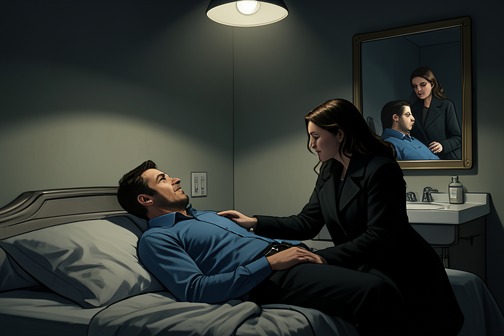
[Ken and BB’s Intimacy Breakthrough During His Cold](entity:event-recall-event-ken-bb-a674e6fec8c2) transforms an evening of one-sided cuddling into an unusually mutual encounter. For [BB Easton](entity:character-recall-character-bb-easton-83d7cb4941b8), the decisive change is not simply that sex becomes more satisfying: [Ken Easton](entity:character-recall-character-ken-easton-3e5b30d633e4)’s active tenderness disproves her assumption that he is emotionally absent whenever she reaches for him, while a bathroom mirror lets her see her postpartum body with unexpected pleasure.
## Causes and Relationship Context
In BB’s account of her marriage, physical affection has often seemed governed by a strict limit. Ken is dependable and restrained, but she describes his usual response to touch as brief endurance followed by withdrawal. Their sex life has followed a similar pattern: Ken generally lies back while BB takes the lead, and his participation seems minimal. Against that history, the cold-night encounter matters because Ken’s response comes from him, rather than being another performance BB has had to coax out of him.
BB’s expectations are shaped by a sexual history very different from the orderly security she associates with marriage. Before meeting Ken, she had experimented with numerous sexual positions, body piercings, and relationships with tattooed boys. Their first sexual encounter, by contrast, was missionary, and BB recalls approaching it with objectives beyond her own pleasure: she wanted to test whether Ken was masochistic and to bolster his confidence. His cautious touch had left her puzzled despite their month of dating and his obvious physical arousal. The later encounter therefore reverses an established pattern: the man she had once studied and encouraged now takes the initiative in responding to her.
The immediate setting is ordinary domestic life. After putting the children to bed, BB finds Ken on the couch, quietly watching television in a soft hoodie with its hood up. His cold has not made him complain or seek attention; it has made him look, to BB, both vulnerable and attractive. She sits beside him, puts her hands beneath his sweatshirt, and rests her cheek on his shoulder. She initially treats the closeness as another instance of unreciprocated cuddling, imagining that Ken might be tolerating her touch rather than sharing it.
## The Encounter
The first reversal comes when Ken turns toward BB and begins kissing her neck. He communicates that he does not want to pass on his cold but still wants to offer physical intimacy, accompanying the gesture with a movement of his hips. BB realizes that he is present and responsive, not mentally elsewhere. His desire is especially striking against her expectation that he will keep her at arm’s length, and the moment redirects the scene from her solitary pursuit of affection to an exchange between them.
They move to the master bathroom, where BB retrieves a small vibrating bullet from a drawer containing an assortment of household and personal items. Ken undresses promptly, and BB follows. He positions her in front of the large mirror above the sink, stands behind her, and touches her breasts, which are fuller because she is nursing. Watching him touch and kiss her, BB experiences the view as affirming rather than exposing. At six months postpartum, she usually avoids full-length mirrors because of her continuing concerns about weight and her history of eating disorders. Here, however, the reflected body appears attractive to her: nursing has made her breasts larger, her hips are somewhat wider, and the resulting curves revise her old image of herself as boyish.
The mirror gives the encounter a second kind of intimacy. BB is not only being touched by Ken; she is watching herself receive that attention and finding the sight empowering. Ken moves to her side to reach one of her pierced nipples, connecting the present scene with BB’s earlier body history without making that history the measure of her current desirability. The image she sees is a postpartum woman whose body has changed, and whose pleasure does not depend on returning to a former shape.
Their sexual rhythm also departs from the passivity BB expects. Ken uses the vibrator and his hands as their intimacy develops, and the two alternate between her pulling him toward her and his taking control of the movement. BB describes the repeated push and pull as making her feel closer to him, even before that closeness feels complete. The physical exchange becomes a negotiation of initiative: she begins by directing the encounter, but Ken answers, presses back, and changes its pace. His participation is not limited to allowing her to act upon him.
## Pleasure, Aftermath, and Significance
Ken reaches orgasm during intercourse, but the encounter does not end with his release. He continues attending to BB’s pleasure with the vibrator and his fingers, and she eventually experiences an intense orgasm that leaves her bracing herself against the bathroom wall. The contrast with her expectation is pointed: BB has been accustomed to thinking of Ken as notably unenthusiastic after he comes, and she anticipates that he will stop satisfying her. Instead, he remains involved until her pleasure reaches its own culmination. Afterward, he washes his hands at the sink while watching her from the corner of his eye; she approaches him, flushed and unsteady, and rests her cheek on his bicep.
The bathroom’s reflection now holds a changed image of both partners. BB sees her disordered hair and flushed face, while Ken’s expression mirrors her shy smile. The encounter does not erase the marriage’s wider history of limited touch, nor does the diary establish that every later intimate moment will be the same. Its importance is more specific: one night of mutual responsiveness makes BB revise her belief that Ken is simply absent from intimacy. The cold, which first seemed to make him available only as a cozy figure on the couch, becomes the circumstance in which he approaches her and stays engaged.
BB’s postscript carries that discovery into comic exaggeration. She searches online for a way to obtain rhinovirus and jokes about keeping a supply in the freezer so Ken might be sick year-round. The thought is not an actual plan reported as carried out; it is a playful measure of how strongly she associates the encounter with sick Ken. The episode thus turns a familiar domestic inconvenience into a private erotic joke, while preserving the central surprise: the husband BB had approached expecting only to cuddle was capable of meeting her with desire, attention, and care.
Event 6
BB Meets Hans at the Goth Girl Party
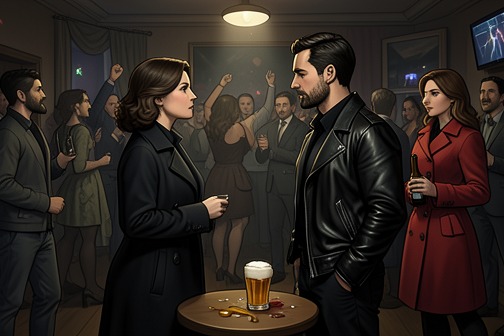
[BB Meets Hans at the Goth Girl Party](entity:event-recall-event-bb-goth-girl-hans-31278b773184) is the first encounter between [BB Easton](entity:character-recall-character-bb-easton-83d7cb4941b8) and [Hans Oppenheimer](entity:character-recall-character-hans-oppenheimer-3ea250fc3d77), and the scene establishes the contradiction that will define her initial impression of him: he looks imposing enough to frighten her, yet his teasing attention makes her feel unusually safe, seen, and drawn toward him. At a party staged amid teenage recklessness and heavy-metal noise, a spilled beer brings BB face-to-face with [Phantom Limb](entity:character-recall-character-phantom-limb-6815de3e393e)’s bassist; a stranger’s confident physical closeness then becomes, in BB’s telling, the beginning of a powerful attachment.
## The party and the collision
The party is hosted by Goth Girl, who has recently left high school to spend more time on a drug habit financed by her much older boyfriend. Having moved into his house, she throws a noisy party to show off her new surroundings. The entertainment is deliberately ill-suited to quiet domesticity: she hires a friend’s heavy-metal band to play in her boyfriend’s living room, hoping, as BB recounts it, to make a police visit more likely. About thirty people make up the audience.
BB is not a metal fan. She prefers alternative rock, even during the period when she is pretending to be punk, but Phantom Limb covers enough Nine Inch Nails songs to keep her in the room. The band’s bassist also catches her attention: she describes him as a tall, dark drink of Heineken. That first attraction is still distant and largely visual. The encounter begins only after the set, when BB goes to the kitchen for another beer, fills her Solo cup at the keg, turns, and collides face-first with him.
The collision is almost slapstick, but its physical details establish the scale difference between them. BB stumbles backward; half her beer splashes onto the floor, narrowly missing one of his enormous black Adidas shoes. [Hans](entity:character-recall-character-hans-c752a7bcbd41) catches her by the upper arms before she falls into the keg behind her. As she looks up from his boat-sized shoes, she registers baggy black pinstriped trousers, a chain wallet, a damp undershirt stretched over prominent abdominal muscles, and a height that seems to postpone the arrival of his face. The accident turns the bassist she had noticed from across the room into an immediate, imposing presence.
## A threatening appearance, softened by play
Hans’s face initially appears to confirm BB’s alarm. His black hair stands in sweaty, headbanged spikes; a silver barbell pierces one side of his heavy brow, and his nose is prominent. BB imagines that he could play a villain in a Die Hard film. Yet this severe image is countered by his gray-blue eyes, pouty lips, and dimpled smile. Her description holds both impressions together rather than resolving one into the other: the stranger looks hard and intimidating, but his expression is playful.
BB’s account makes the contrast bodily and atmospheric. Hans is tall, slender, dark, and hard, while the feeling she associates with him is like standing beneath a streetlight on a hot summer night and receiving sunshine. The imagery does not make the encounter less physically unequal; it explains why that inequality does not register to her as danger in the moment. When Hans asks, “Hey, kitten. Going somewhere?” BB manages an apology and tries to move around him. Instead, he tucks her beneath his arm, holds her against his side, and steers her back toward the living room, his fingers wrapped around her shoulder.
BB recognizes that this is an unusually forward way for a stranger to behave. She nevertheless describes herself as unable to resist being carried along by his self-confidence, imagining the moment as a strange suspension in which a drunk teenage girl at a party is safe with a man she has just met. Her account presents that feeling as her own baffling response, not as evidence that his conduct would appear harmless to everyone. The difference between the warning signs she says ought to be present and the security she actually feels is central to the scene’s charge.
## Nicknames and instant intimacy
The movement back into the living room deepens the physical closeness. Hans leads BB to a black leather sofa, then sits down without letting go of her. He twists her as they land so that she ends up beside him, her legs across his lap and his free hand on her thigh. The speed and ease of the maneuver make BB recognize his practiced confidence; she thinks that he is good at this. The scene’s flirtation is therefore conveyed not just by what he says but by the way he arranges their bodies before she knows his name.
Hans calls her Tinker Bell and asks for her name. Distracted, BB initially blurts out her own initials as a question, then tries again and introduces herself directly: “I’m BB. Hi.” His next teasing question calls her Bumblebee and asks why she was getting her own beer, joking that pretty girls should not have to fetch their own drinks and that she is lucky he found her. BB recognizes the line as cheesy, but says his playful delivery makes her relax and blush. When he predicts that he will be getting all her drinks from then on, the nickname becomes part of the scene’s quick intimacy: he turns an ordinary trip to the keg into a flirtatious promise of continued attention.
## From first meeting to remembered attachment
BB frames Hans as a stranger with no boundaries, and says that an internal warning should have been sounding. What unsettles her, in retrospect, is that she feels none of the desperation or needy, predatory quality she expects to fear. Instead, she describes a warm, familiar atmosphere around his flirtation. Before she knows his name, she feels more secure, beautiful, and interesting than she has with any man she has met. Her final declaration, “I was home,” compresses the disproportion between how little she knows about him and how complete the feeling of recognition seems to her.
A later image of BB waiting for Phantom Limb to take the stage supplies the relationship’s consequence: she calls Hans her boyfriend and admits to feeling territorial as the audience prepares to see how attractive and talented he is. She imagines that another woman might have to be pulled away from him, partly because she believes he is too kind to reject an admirer bluntly. This later recollection does not change the party scene into a settled account of their relationship; it shows how decisively BB remembers the first meeting. The spilled beer, the arm around her shoulders, and the improvised names become the origin point for a bond that she later experiences as both affectionate and possessive.
Event 7
Hans and Brooke’s backstage reconciliation
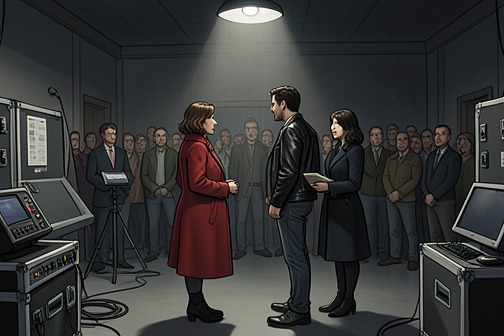
[Hans and Brooke’s backstage reconciliation](entity:event-recall-event-hans-and-brooke-s-backs-f8dae7dd623d) turns a jealous confrontation after a concert into a decisive change in their eight-month relationship. The apparent threat is an autograph-seeking fan, but the deeper rupture is [Brooke](entity:character-recall-character-brooke-20a2633f2f80)’s fear that a rock star like [Hans](entity:character-recall-character-hans-c752a7bcbd41) will eventually betray her. His explanation and desperate plea do more than correct a misunderstanding: they persuade her, for the first time, to stop holding herself apart from the relationship.
## Causes and Background
Brooke’s anger begins with what she believes she has seen: Hans entertaining a woman who seemed to be seeking more than an autograph. She challenges him over whether he would have signed the woman’s breast or let her ride him while Brooke made her way backstage. The accusation is crude and deliberately cutting, but its stakes are plain. Brooke tells Hans she cannot continue as his girlfriend if jealousy makes her unable to bear situations like this, and apologizes as though she is already leaving.
The threat of departure is sharpened by the intensity of Brooke’s attachment. She had thought of Hans as a good time, yet only about ten minutes earlier had believed she might want to spend her life with him. In her imagined exit, she plans to reach her black Mustang before allowing herself to cry. The scene places a possible breakup beside the future she has already begun to imagine, exposing how much the relationship means even as she tries to end it.
That contradiction has accompanied the romance from its beginning. Brooke describes their connection as love at first sight, dating its tone to the Goth Girl’s party, where Hans swept her off her feet. Yet, however perfect their relationship seemed, she had kept part of herself ready to leave. Her private warning was that rock stars were unfaithful and that becoming attached would end in heartbreak. The argument over the fan therefore gives an old fear a specific occasion; it does not create that fear from nothing.
## The Confrontation and Explanation
Hans first greets Brooke with such open enthusiasm that she nearly forgets her anger. He leaps up, and Valtrex has to clutch the filthy upholstery to keep from falling. Hans gathers Brooke into a crushing bear hug. When he feels her resist, he sets her down but keeps hold of her arms, studying her face and asking what has happened. His immediate concern is sincere, but it also misses the reason she is upset: he does not understand that his interaction with the woman has become the issue.
Brooke pulls away far enough to tell him she is angry and that the two of them may be unable to continue. She has barely begun to turn toward her imagined walk to the Mustang when Hans catches her around the middle and rotates her back toward him. He kneels, his hands on her hips, and looks up at her. Brooke notices the reversal in their height: for months she has had to crane her neck to meet his gaze, but now, although Hans is physically holding her in place, he positions her as the one with power.
The setting undercuts the glamour of the scene. Hans is still wearing stage clothes, with his eyeliner on and sweat on his body, after performing before thousands of screaming fans. Now he is on his knees in a parking lot littered with what Brooke describes as broken light bulbs and human teeth; elsewhere in the same encounter she imagines him among rusty screws and asbestos shards. The contrast between rock-star spectacle and this debris-strewn plea makes his distress immediate rather than theatrical.
Hans explains that the woman had a media pass and claimed to represent Y105. He had expected to sit down for a short interview while Brooke came backstage. As the conversation continued, he realized that the woman was not from the radio station but had obtained a press pass in order to ask for an autograph. Brooke doubts that an autograph was all she wanted, and Hans’s explanation does not instantly erase her jealousy. It does, however, show that the encounter she interpreted as a sexual possibility began as a supposed interview and became an autograph request, not a deliberate betrayal.
## The Plea and Reconciliation
Hans apologizes and asks Brooke not to leave. Still holding her around the waist, he tells her that he fails to notice women flirting because his attention is fixed on her: to him, everyone else is someone he must get past to reach Brooke. He also explains why he no longer looks toward her from the stage. When he scans the audience, he sees men trying to buy her drinks, knock her down in the pit, or press against her in the front row. The sight makes him want to leap into the crowd, but it distracts him from playing; instead, he grits his teeth, focuses on the music, and hopes Brooke will reach him backstage unharmed.
His words recast what Brooke took as carelessness. Hans is not describing a lack of interest in what happens around him, but an attention so focused on Brooke that other women register only as people who are not her, while the dangers she faces in the crowd can overwhelm his concentration onstage. His protectiveness is also a source of helplessness: he sees what is happening to her from the stage but cannot intervene without leaving the performance. The conflict shifts from suspicion about his desire for someone else to recognition of how thoroughly he is already oriented toward her.
Brooke responds with tears, relief, and a kiss, pulling Hans up to meet her. She realizes that the problem was not simply that Hans had failed her; she had never felt worthy of him. At concerts, she compares herself with women in tight miniskirts and tank tops, or with fans wearing oversized Slipknot shirts and long black hair. She sees her own narrow hips, flat chest, and freckles as evidence that she does not fit in. Even her attempt to dress down her punk style—a little black dress embroidered with white Jolly Rogers and steel-toed Grinders—leaves her feeling as conspicuous as a character from Tank Girl. Hans’s devotion answers a doubt about her own desirability that the argument had brought to the surface.
## Aftermath and Significance
After Brooke kisses him, Hans’s expression changes from devastation to cheerfulness. He offers her his arm and walks her to her car. The Mustang is several blocks away in a recently gentrified antebellum neighborhood, and the walk through thick summer air feels to Brooke like floating together in a love bubble. That gentle scene follows an encounter marked by bodily restraint, accusation, and the prospect of a breakup; reconciliation does not merely restore their previous mood but changes Brooke’s confidence in the relationship.
The decisive change is Brooke’s commitment. For eight months she has preserved an escape route, telling herself that Hans is too good to be true and that attachment will lead to heartbreak. Seeing him kneel before her in full stage attire silences that warning. She describes herself as all in for the first time, and the reconciliation becomes a turning point not because every insecurity vanishes, but because she no longer treats leaving as protection against the possibility of loving him.
The walk does not end at the car. As the Mustang’s taillights come into view, Hans leads Brooke away from the sidewalk and into a neatly kept backyard. The movement interrupts the apparent arrival at her planned destination: she had imagined reaching the car alone to cry, but now she is following Hans elsewhere, reconciled and holding his hand. The scene closes on that unexpected turn, carrying the restored intimacy forward without explaining what happens in the yard.
Event 8
Hans and Brooke’s Night in the Basement
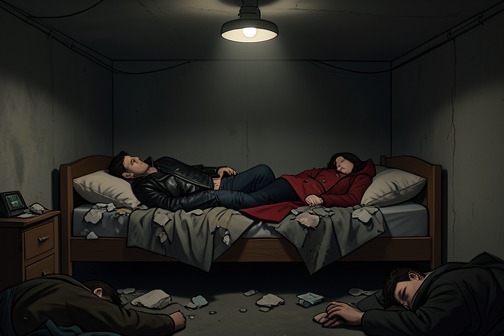
[Hans and Brooke’s Night in the Basement](entity:event-recall-event-hans-brooke-12c450a3446e) is a remembered sexual encounter that becomes the measure of intimacy against which [Brooke](entity:character-recall-character-brooke-20a2633f2f80) judges her later marriage. Its setting is almost aggressively unromantic: a winter basement, a bed crowded with debris, and exhausted bandmates asleep nearby. Yet the constraints of that scene—its noise, discomfort, and need for care—help make the experience feel unusually attentive and emotionally complete to Brooke.
## Setting and Circumstances
After most shows, [Hans](entity:character-recall-character-hans-c752a7bcbd41) and the other members of [Phantom Limbs](entity:organization-recall-organization-phantom-limbs-98d4bce16ff6) went to the small home of the lead singer’s father to sleep. On this particular night, the band had just played a particularly powerful show. The men were exhausted and very drunk; one by one, they made their way to the basement and collapsed on the linoleum floor. Hans alone remained awake.
Brooke describes herself as ravenous after watching Hans perform. She had been unable to keep her hands off him in the car, and by the time they reached the house, both of them wanted to continue what they had begun on the way there. The setting offered little privacy and less comfort. In the basement, sleeping bodies lay scattered as if a bomb had gone off. The bed in the corner had been left untouched, though boxes and other debris were piled on it. The room’s disorder, and the sleeping men around them, made the decision to use that bed both practical and precarious.
## A Deliberate, Constrained Encounter
Hans and Brooke tiptoed past his snoring bandmates to reach the bed. They cleared away the debris and removed their clothes quickly, then climbed under a scratchy wool blanket. The bed squeaked, so they had to move slowly and deliberately, monitoring their breathing and attending to each sound and movement. What initially seemed like an inconvenience changed the pace of the encounter: the need for quiet made them more present to one another.
Brooke remembers each drag and pull as significant, with time seeming to slow almost to a stop. Their efforts to remain silent did not keep the moment emotionally contained. Despite trying not to make a sound, they repeatedly breathed the same three words to one another: Hans told her he loved her. The contrast between the care required by their surroundings and the intensity of their connection is central to the memory. The bed was dusty and the room was crowded, but Brooke experienced the two of them as enclosed in a private, loving space within it.
## Why the Night Became a Touchstone
Brooke calls this the best sex she had ever experienced, while also stressing how unglamorous it was. It took place in the dead of winter on a linoleum-floored, wood-paneled basement floor’s only usable bed, amid dust, mouse droppings, and the band’s sleeping members. It was not a luxurious or carefully prepared romantic setting. Its significance came instead from the mutual attention and affection that Brooke felt within those conditions.
She compares the memory to the first experience of a drug: the kind of high that might make a person spend the rest of life trying to reproduce it. For a moment, she wonders whether the connected, almost enveloping feeling she experienced with Hans was an exceptional rush that could never return, regardless of whom she later loved. But she rejects that conclusion. The memory is not, in her account, proof that she is condemned to chase an irretrievable past.
## Memory and Marital Contrast
The scene returns to Brooke in the context of her dissatisfaction with intimacy in her marriage to Ken. She describes Ken as physically and emotionally reserved, and says that attempts to initiate a loving exchange can make him retreat. Against that pattern, the basement memory represents not merely sexual intensity but a form of reciprocal feeling: attention shared between two people, accompanied by an explicit declaration of love. Brooke imagines that even a small gesture of affection from Ken could have made the comparison unnecessary, but says his distance leaves the remembered encounter sharply distinct.
The contrast is not simply between a sensitive former lover and a cold husband. Brooke also recalls a past shaped by sexual experimentation and attraction to danger, while describing the stability Ken offered as a balm after that period. The basement night complicates any easy equation of intimacy with polished surroundings or with a particular kind of partner: in her recollection, closeness arose in a shabby room under practical constraints. She says that returning to the memory—the light in Hans’s gray-blue eyes, her hands in his hair, and his words beside her ear—can bring back the same bodily and emotional response. The encounter therefore remains both a specific night with Hans and a remembered capacity for connection that Brooke believes is still available to her.
Event 9
Brooke and Ken’s First Official Date
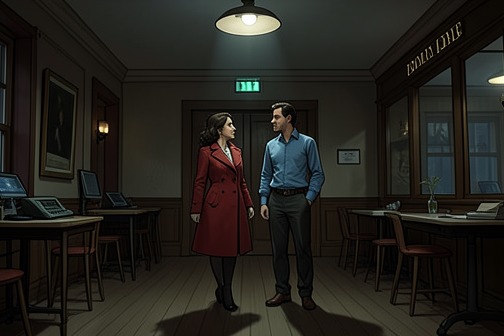
[Brooke](entity:character-recall-character-brooke-20a2633f2f80) and Ken’s first official date is the point at which Brooke’s vivid attraction to Ken becomes a promising, if still puzzling, relationship. A reunion at the theater, a dinner that reveals how much the pair share, and an unexpectedly domestic visit to Ken’s spacious home turn her fantasies about him into encounters with the man’s actual life. The evening offers signs of compatibility and security, but the contrast between Brooke’s appetite for intensity and Ken’s reserve remains in view.
## Expectations Before the Date
Brooke arrives at the date with romantic expectations shaped by a history of seeking danger, intensity, and sexual adventure. Before Ken, she had experimented with piercings and unconventional appearance and had pursued boys whose tattoos and rebelliousness made them seem like soul mates. At school, she even hoped her steel-toed black leather Grinders might help persuade Lance to rescue her from Ronald McKnight; the plan failed when Lance proved more interested in Ronald than in confronting him. Her attraction to the signs of a bad-boy life was not merely aesthetic: Brooke later describes how the scent of Calvin Klein’s Obsession for Men, a pierced lip, or a full sleeve of tattoos could set off an almost physical urge to abandon the stability she had worked for.
Ken had already made an impression at Jason’s “Big Game” party, but by the time Brooke saw him again she had begun to wonder whether the black-clad, sexually compelling version of him was real or a fantasy intensified by a breakup and beer goggles. That uncertainty gives the date its first tension. Brooke is attracted to Ken, yet she is still measuring him against an imagined persona and against the more visibly rebellious men who had drawn her attention before.
## Reunion at the Theater
At six o’clock the next day, Brooke drove her old Mustang to the aging local movie theater where Ken worked. The sight of him in the lobby arrested her: he was directing employees in a black button-up shirt and matte black tie, with his sandy-brown hair mussed and his sleeves rolled to reveal his arms. His appearance renewed the fantasy she had begun to doubt. The prose heightens the moment into a private romantic spectacle, imagining a Sugar Ray serenade that only Brooke could hear; the scene deliberately lets her extravagant inner response sit beside the ordinary workplace around her.
Ken took time to reach her at the doorway, but when he did, he wrapped his arms around her waist and pulled her close. Brooke describes the embrace as electrifying and emphasizes how little he let her go. He then held the door open and ushered her into the brisk March evening. In the parking lot, he released her and asked where she wanted to go for dinner. The gesture matters because it makes physical warmth part of the encounter, even as Brooke’s account presents her own reaction as far more heightened than his outward behavior.
Trying to seem easygoing, Brooke instead blurted out, “I love Italian!” She immediately felt embarrassed that she had revealed so much enthusiasm so quickly. Ken answered, “Really? Italian is my favorite.” Their exchange turns a small preference into the first clear sign of common ground, and the date begins to loosen Brooke’s fear that the man she had imagined might not exist.
## Dinner and the Discovery of a Shared Life
The pair chose a restaurant neither had visited before. Brooke later says it became their favorite, connecting the date to a place that endured beyond the evening itself. As they talked, she found that their overlap extended well beyond food: they liked the same music, had attended some of the same concerts, and shared a favorite film, Braveheart. Ken was apolitical and atheist, so Brooke’s countercultural political and religious beliefs—shaped by her hippie parents and Oprah Winfrey—did not become a point of friction.
The sequence gives the date a gradual shift in value. Brooke begins by wondering whether her attraction rests on an illusion; dinner supplies evidence of a relationship that could work in ordinary conversation, through shared tastes rather than theatrical danger. The compatibility does not erase their differences, but it gives her a reason to imagine a future with the restrained man in front of her, rather than only with the black-clad figure she had built up in her mind.
## Ken’s House and the Unexpected Tenant
Just as Brooke was mourning the end of what she considered the best dinner of all time, Ken invited her to hang out at his house. She had assumed that an invitation to a man’s house would mean a basement, bonus room, or garage in his mother’s home. Instead, she followed Ken’s red sports car to a large, white, two-story traditional house ringed with blooming azaleas. The house had window boxes, plantation shutters, a covered porch spanning the first floor, and a gazebo with a bench swing. Its settled charm struck a particular nerve for Brooke, who had moved frequently and grown up hearing her parents whisper about bankruptcy and an apocalyptic tick infestation.
The immaculate interior reinforced her surprise. The living room had sage-green walls, a large stacked-stone fireplace, an overstuffed camel-colored couch, and original paintings and pen-and-ink sketches of the Eiffel Tower. Brooke began to think of the place as the home she wanted, then noticed a young woman emerging from the kitchen. Robin, a theater employee, hurried upstairs after seeing that Ken had company. Ken explained, “That’s Robin. She works at the theater and needed a place to stay, so I’m renting out one of the other bedrooms to her.” The detail establishes that the house was not simply an impressive backdrop: Ken was renting out a bedroom to someone who worked at the theater, and Brooke had to revise her picture of who lived there.
The encounter also sharpened the imbalance Brooke perceived between them. She was twenty, attending college, working at [Macy’s](entity:organization-recall-organization-macy-s-384729c6d9fa), and living with her parents; Ken was twenty-three, owned the house, and seemed to manage his life with meticulous control. Yet Brooke says that he let her call the shots and physically push him around. His apparent willingness to yield confounded her image of the capable, orderly homeowner and opened a new question about the private dynamic beneath his composed exterior.
## Early Intimacy and the Date’s Longer Meaning
The date did not instantly resolve that question. Brooke recalls that when she manhandled or pushed Ken, he responded with an amused smirk and no resistance, leading her to suspect that he wanted her to hurt him—and to admit that she wanted to. It took her about three weeks to get past what she saw as his lack of tattoos and emotional range before they had sex for the first time. Their first encounter was missionary, a position she did not usually choose. She says that getting off was not her priority: she wanted to find out whether Ken was a masochist and, as a separate concern, to bolster his confidence. During foreplay, his touch seemed so cautious to her that she compared him to someone afraid of losing a finger around a dangerous goat. Her account presents desire as something Brooke initiates and interprets, while Ken’s hesitation leaves her trying to work out what he wants.
In retrospect, this first official date becomes an origin point for a marriage whose strengths and frustrations would remain intertwined. Brooke later describes Ken as dependable, law-abiding, and emotionally cold, a husband whose stability helped soothe her exhausted nerves after years of attraction to risk. She also remembers feeling that his reserve made even affection and sex something she had to pursue. The date contains both sides of that later account in miniature: Ken offers an electric embrace, a dinner full of shared interests, and a secure home, while Brooke continues to test what his composure conceals. Its promise lies not in making them alike, but in giving Brooke enough evidence of connection and safety to choose a life with someone who did not resemble the men she had once believed she wanted.
Event 10
Brooke and Ken’s First Sexual Encounter
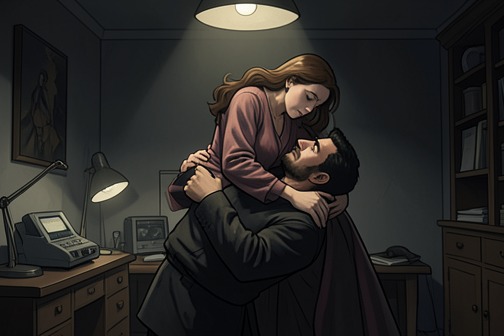
[Brooke](entity:character-recall-character-brooke-20a2633f2f80) and [Ken Easton](entity:character-recall-character-ken-easton-3e5b30d633e4)’s first sexual encounter marks an early shift in their relationship: what she initially reads as passivity becomes a deliberate invitation for her to take charge, while her attempt to understand him reveals an unexpected preference that reshapes the encounter.
## Background and Initiation
In a journal entry looking back on the beginning of their relationship, Brooke recalls that she and Ken did not have sex immediately. After about three weeks, she decided to move past her reservations about his lack of tattoos and limited emotional range; by the time they were intimate, they had been dating for over a month. She approached the encounter with two priorities: to find out whether Ken was a masochist and, first, to bolster his confidence. When he touched her with striking caution, Brooke initially wondered whether he was afraid of crossing a boundary, but she then took the initiative and positioned him above her. His continued stiffness and quiet concentration seemed puzzling until she recognized a familiar, mischievous expression: Ken was intentionally making her call the shots. The reversal gave Brooke control of the immediate action, even as she understood that Ken had set the terms of that control.
## Testing and Discovery
Brooke’s first attempt to reassure Ken was deliberately performative: she pretended to climax after about three minutes, hoping to build his confidence. She then tested her other suspicion by digging her nails into his shoulder blades. Instead of recoiling, Ken’s muscles relaxed beneath her touch. As she continued, his response made clear that pain was not simply something he tolerated; it was a source of pleasure. The discovery overturned her assumption that his restraint meant passivity, revealing a desire she had set out to investigate but had not expected to uncover so quickly.
Before her nails had reached his waist, Ken was clutching her and had reached climax. Brooke took this as confirmation that he was a masochist, and the newly understood dynamic changed the mood between them. With Ken’s confidence bolstered and the marks on his back raised, they spent the next several hours cuddling, talking, and laughing. For their second round, Brooke made sure she was on top; she later recalled that it was far better for her, too. The encounter thus moved beyond her effort to manage his confidence or diagnose his preferences: experimentation gave way to mutual ease and a kind of physical closeness she had not expected from someone so reserved.
## Retrospective Meaning
The morning after, daylight entered through the small eyebrow window above Ken’s bed, falling in pink and orange streaks across the white sheets and the couple’s entwined bodies. Brooke understood the scene as more than a successful experiment in confidence or a discovery about Ken’s preferences: she could be attracted to someone stable, responsible, and passive, and that attraction could come easily. The realization unsettled the assumptions carried over from her earlier life, when tattoos, piercings, and risk had helped define what she expected to desire. Ken’s caution had seemed at first to confirm their difference; by morning, their closeness had made that difference newly legible as a possibility rather than an obstacle.
The later marriage gives the memory an ironic afterlife. Brooke would describe Ken as habitually restrained in affection and sex, and on December 20 she marked a later, unusually intimate encounter as their annual [Bonerversary](entity:event-recall-event-bonerversary-06c46780256f). That date does not identify their first time; instead, it shows how rare she came to regard a departure from their ordinary pattern as worth commemorating. Against that later scarcity, the first encounter’s hours of conversation, laughter, and physical ease stand as an early instance of intimacy she had not expected from Ken—and a measure of what she would continue to hope for.
## The Encounter and Brooke’s Sexual History
Within a couple of weeks, Brooke and Ken’s conversation turned to how many people they had slept with. Brooke told him eight, a technically accurate count of the people she had slept with before him, but one that concealed the encounter’s effect on her total. She later explained that she wanted to seem fractionally more chaste and was reluctant to cross into double digits. The exchange gives their first time an afterlife beyond the bedroom: even as Brooke was discovering an unexpected kind of intimacy with Ken, she remained careful about how her past would appear to him.
Event 11
Bonerversary
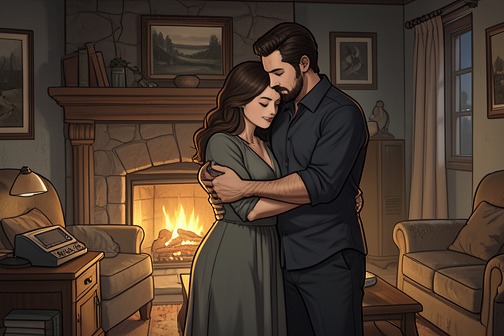
[Bonerversary](entity:event-recall-event-bonerversary-06c46780256f) is the name [BB Easton](entity:character-recall-character-bb-easton-83d7cb4941b8) gives to a December 20 encounter that breaks the pattern of emotional and sexual distance in her marriage to [Ken Easton](entity:character-recall-character-ken-easton-3e5b30d633e4). Told in a diary entry dated December 21, the episode turns her expectation of another unreciprocated attempt at closeness into a startling experience of mutual passion—and gives her a date to mark as proof that change may still be possible.
## Causes and Background
For years, BB has described Ken as a dependable but emotionally unresponsive husband: he provides stability, yet recoils from ordinary touch and participates in sex with little visible enthusiasm. She characterizes him as a Husbot, a marriage-tested domestic machine, and contrasts his reserve with her own history of adventurous sexual experience before they met. Ken’s steadiness had been a refuge from the upheaval associated with her attraction to rebellious men, but within their marriage that security also came to feel like a lack of warmth.
Their first sexual encounter had already shown the mismatch. It was missionary, a position BB did not usually prefer, and she approached the experience with objectives beyond her own pleasure: she wanted to find out whether Ken was a masochist and to bolster his confidence. His cautious touch, despite their dating for more than a month and his obvious physical arousal, puzzled her. The later pattern of subdued intimacy made the December breakthrough feel less like a routine variation than a reversal of what she had come to expect.
## The December 20 Encounter
Earlier that day, [Sara Snow](entity:character-recall-character-sara-snow-ffcf7a8ed72c) told BB that she had slept with a former coworker who was married. The news unsettled BB not because Sara was single and had become involved with a married man, but because the particular man seemed an unlikely candidate for infidelity. It prompted BB to think about her own conduct: although she wrote sexually explicit material in her journal, she wanted Ken to know she would never have sex with someone else. She had begun the writing project hoping it would encourage him to become more engaged, but now wondered whether it might instead push him away.
That evening, Ken was watching football in bed, as usual. BB crossed the person-sized rise she calls Chastity Mountain, formed by the lack of spooning and cuddling in the middle of their mattress, and settled against him. He raised an arm to let her in but did not otherwise respond. BB spoke tearfully about how much she loved him while he continued looking at the television. As her words went unanswered, she grew self-conscious and eventually stopped. The [Atlanta](entity:location-recall-location-atlanta-bb210fd7f448) Falcons had won again, she reflected—not merely the game, but the war for Ken’s attention.
BB was settling into resignation when Ken abruptly lifted his hips and removed his boxer briefs in one fluid movement. The gesture surprised her because he usually relied on the close-fitting underwear to feel secure while sleeping. He rolled her onto her back, pressed his naked body against hers, clasped her hands above her head, and kissed and nipped at her shoulders, neck, and jaw. His arousal and initiative were immediate, unlike the foreplay BB ordinarily expected to spend time building.
The reversal continued in his touch. Once BB freed her hands, she drew his face to hers; Ken used his newly freed hands to tug gently at her hair, skim her sides, and circle her nipples. As he moved against her, he looked down at her with a warmth and reverence she could scarcely recognize. BB lifted her hips to meet him and experienced the encounter as an expression of love he could not put into words. Ken climaxed within a few minutes, but BB understood the intensity and his physical response as evidence that he had been overcome by emotion, not simply caught up in sex.
## Consequences and Commemoration
BB calls the experience Ken’s first emorection, her term for an emotionally charged erection, and interprets it as a breakthrough after ten years of poems, paintings, pillow talk, and affection that she had felt was unreturned. The change is striking precisely because Ken’s earlier behavior had seemed to confirm that he could not or would not meet her bids for closeness. She likens her persistence to water gradually wearing down stone, while acknowledging that the moment does not guarantee a permanent transformation: Ken might withdraw again.
The encounter also changes what BB takes the marriage to mean. She had begun by seeking reassurance that her private writing would not drive Ken away; instead, Ken’s response gives her reason to hope that the emotional distance between them is not unbridgeable. That hope remains cautious. The diary records a single night, not a settled new pattern, and BB knows the intimacy might not recur soon.
She therefore makes the event memorable by giving it a recurring date. BB declares December 20 the Bonerversary and imagines an annual observance: the children will stay at her parents’ house, she will arrange a meal, and she and Ken will quietly remember the night he did not behave like a cold, limp fish during sex. The mock-solemn ritual is comic in its particulars, but it also answers the precariousness of the breakthrough. Even if Ken’s emorection fades, the anniversary will keep the experience—and the hope it gave her—from disappearing.
Event 12
Skeletor’s Death
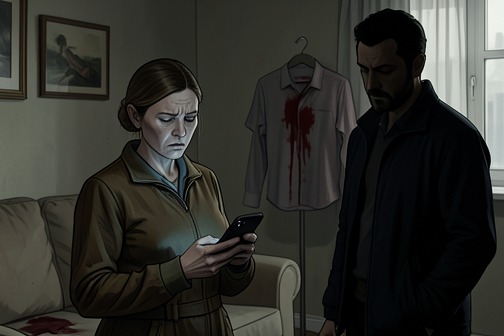
[Skeletor’s Death](entity:event-recall-event-skeletor-d51ab6f706ff) is the news [BB Easton](entity:character-recall-character-bb-easton-83d7cb4941b8) had been unable to stop anticipating: on [May 28, 2009](entity:time-recall-time-may-28-2009-688e8df163b8), she learned that Ronald McKnight had died, stabbed in a bar fight at the age of twenty-eight. The death closes the immediate threat of his repeated calls, but the story’s later, disputed account of the fight makes the news less a simple release than a collision of fear, grief, and uncertainty.
## The Call and the News
Before she learned of McKnight’s death, BB still received calls that rang day and night. When the caller ID showed Blocked, she had to restrain herself from screaming and stomping on her phone. Yet changing her number felt more frightening than enduring the calls: she could not bring herself to cut that connection, although she did not understand why. The persistence of the phone line gives the news its long-delayed force. She had been waiting, without fully recognizing it, to hear what had happened to the man she had met years earlier.
The message came from Tim, an old high-school friend with whom BB had not spoken in years. Fortunately, he still had her cell number. After hearing his clipped, foreboding voicemail, she called him back, and he told her that McKnight was dead. The facts were stark: he had been stabbed to death in a bar fight, aged twenty-eight. The date, May 28, 2009, marks the moment when the unanswered question surrounding McKnight became a death BB had to reckon with.
## The Disputed Circumstances
The circumstances of McKnight’s death reach BB through two sharply different accounts. As the story was told, he was trying to break up a fight between a friend and another man when that man’s girlfriend stabbed him in the back. The media presented McKnight as a heroic veteran who had stepped into a local bar dispute to defuse violence. The account offers a clean moral picture: a man intervenes, an assailant’s companion kills him, and the veteran becomes the victim of the very violence he tried to stop.
BB finds that version difficult to reconcile with the man she remembers. After returning from overseas, McKnight had been an emotional paradox: in their irregular phone calls he could be pensive, candid, and introspective, but after drinking he became more violent, brash, and reckless. Within months of his return, he wrecked his motorcycle twice. The second crash left his back so badly scraped that his McKnight coat-of-arms tattoo disappeared. These details do not establish what happened in the bar, but they shape the lens through which BB receives the public account; his postwar volatility makes the heroic version feel to her less like an explanation than a simplification.
Her own imagined alternative is harsher. BB believes that the McKnight she knew may have started the fight or joined it to finish it, and that, once enraged, he might have kept beating the man in his grasp until the man went limp. She even recognizes that if McKnight had put her boyfriend on the ground in that state, she might have wanted to stab him herself to make him stop. Yet she immediately questions the story she is telling herself. Perhaps she wants to believe in a just world where a veteran returning from overseas would not be killed by a fellow citizen while trying to prevent a fight. The death therefore remains both confirmed and morally unresolved: McKnight is dead, but the competing accounts leave BB unsure whether she is confronting his final act or the version of it she can bear to believe.
## The Casket, the Terminator, and the Unborn Child
At McKnight’s funeral, BB faced the distance between the boy she remembered and the man in the casket. A sonogram photo rested in her pocket, its edges worn beneath her fingers as she looked at him: the freckle-faced boy who had once picked dandelions for her and drawn stick-figure pornographic pictures at school had become old, leathery, and spent. His weathered skin bore deep wrinkles, and his long, slicked-back blond hair lay thinly against his head. Without the vivid blue eyes that had once been the only striking color in his pallid face, he seemed almost unrecognizable to her, like a person wearing an unfinished rubber mask.
The altered face made the death feel unreal. BB’s mind turned to the ending of *The Terminator*, when Sarah Connor sees the machine that has pursued her finally lie still. She recognized her own relief and disbelief in that image: McKnight had been her personal Terminator, obsessive and unrelenting, a threat that seemed programmed to kill. Now he lay motionless, the blue light in his eyes extinguished for good. His death meant that the relentless danger she associated with him had ended, but seeing him dead did not make the years of fear or the loss of their earlier intimacy disappear.
The sonogram in BB’s pocket made the moment doubly charged. As she mourned her first great love, another great love was growing inside her: the little boy she was carrying. In retrospect, she described her four-year-old son as entirely her own—a lover, rebel, artist, and old soul—and imagined that the universe had sent him to keep her from killing her husband. The juxtaposition does not resolve her grief; it places an ending beside an approaching life, so that McKnight’s death is remembered both as the stilling of a personal menace and as a moment when BB was already carrying a new future.
## Narrative Closure and Uncertainty
The chapter title, “Hasta La Vista, Knight,” gives the news a farewell-shaped frame, but the account refuses the certainty of a clean ending. BB Easton can identify the date and manner of Ronald McKnight’s death; she cannot know whether the public story of his intervention, or her darker reconstruction of his conduct, is true. By setting what she heard against what she remembers, the memoir makes the limits of her knowledge part of the event itself: McKnight’s death is final, while its meaning remains unsettled.
Event 13
Brooke and Ken’s Attempt at Beach Sex

[Brooke and Ken’s Attempt at Beach Sex](entity:event-recall-event-brooke-ken-e56b6e8d6a5f) is an anniversary episode in which an imagined seaside adventure collides with the practical discomforts of a real beach. The attempt does not fulfill [Brooke](entity:character-recall-character-brooke-20a2633f2f80)’s fantasy of effortless passion, but it gives her a new appreciation for the comfortable intimacy of married life.
## Anniversary Plan
The episode is framed as a journal entry dated May 27. Brooke says Ken surprised her on their anniversary with an invitation to have sex on the beach, an idea she had not known was associated with nine years of marriage. She had thought the traditional ninth-anniversary material was wood, and treats the mix-up with characteristic humor. The invitation nevertheless turns a familiar vacation setting into the stage for a long-anticipated experiment.
Ken first raises the idea after the couple has returned to their beach cottage. They work out the practicalities rather than relying on spontaneity: they settle on a smooth patch of sand beneath a wooden walkway extending over the beach, plan to bring towels, and arrange to go out after the children are asleep. After dinner at an Italian restaurant in downtown [Charleston](entity:location-recall-location-eb8942edc0a7), they return to the cottage, put the children to bed, and spend time with Ken’s parents before heading out once it is dark. The clandestine timing gives their anniversary plan a sense of adventure, but also leaves them watching the clock and anxious not to attract the older Eastons’ attention.
## The Attempt and Its Interruption
At the agreed time, Brooke and Ken hurried to a spot beneath the boardwalk stairs, far enough onto the beach to count as being on it but close enough to return before Ken’s parents grew concerned. The rush shaped the encounter from the outset. Brooke wanted some foreplay to help her relax, while Ken, apparently more nervous, spread out the towel and lay down stiffly. His stillness recalled the habitual reserve that Brooke had hoped the anniversary plan might interrupt.
Brooke tried to draw him into the moment with kisses and touch, and Ken gradually responded. But the chosen towel was too narrow to support both his torso and Brooke’s knees; as she moved, her knees pressed into the sand. What had begun as an attempt to make a romantic fantasy real became a practical problem she could not ignore. Brooke stopped, pulled the towel from beneath Ken’s head, and repositioned it under his knees. The interruption dispelled their momentum, leaving Ken’s renewed passivity conspicuous just when she had wanted the experience to feel spontaneous and mutual.
Rather than abandon the plan, Brooke improvised. With sand on both hands, she decided against touching Ken and instead removed his hoodie and her dress and bra. The unexpected gesture revived his interest, and the encounter resumed, though Brooke was now acutely aware of being naked outdoors, sober, and only a short distance from where their children were sleeping. The contrast between the private intimacy she had sought and the exposure she felt turned the beach from a romantic backdrop into an awkward, materially uncomfortable setting.
## Aftermath and Reassessment
Brooke’s striptease quickly restored Ken’s arousal: within two minutes, he climaxed. She made muffled sounds that could have passed for her own climax, but the two understood that she had not reached one. The encounter therefore did not deliver the mutual, effortless pleasure promised by the fantasy; its success lay elsewhere. Ken had joined her in attempting something unfamiliar, even as the practical mishaps and her growing embarrassment displaced the transcendent mood she had first imagined.
Brooke recasts that disappointment as a useful correction to her expectations. Each time an eagerly anticipated experience proves logistically unpleasant rather than liberating, she says, she values their comfortable, conventional sex life more. The beach attempt changes her view of vacation intimacy: instead of wishing that she and Ken were having sex outdoors like teenagers, she can appreciate avoiding sand in their bodies. The episode’s comic reversal is that an awkward failure leaves her more content with the ordinary marriage she had hoped the fantasy would briefly transform.
The ending keeps the pattern open rather than treating this lesson as a final renunciation of adventure. Brooke still imagines receiving a Mile High Club experience for their tenth anniversary, but immediately anticipates that it may be just as nerve-racking, awkward, and disappointing. The only flight planned for the following summer is an overbooked commercial trip to Disney World, an anticlimax that extends the joke: fantasy repeatedly promises a glamorous setting, while the couple’s actual circumstances supply crowds, logistics, and the possibility of another story about what did not go as planned.
## Place in the Marriage Narrative
The beach attempt belongs to a longer negotiation between Brooke’s appetite for dramatic romantic gestures and Ken’s restrained way of expressing affection. Earlier, she described their ordinary intimacy as carefully limited and often lacking the participation she wanted; she had once hoped that a more theatrical approach might draw him out. Their anniversary plan reverses that pattern only partly: Ken proposes the unusual setting, but the practical arrangements and much of the effort to revive the encounter fall to Brooke. His willingness to try matters to her even though the experience does not become the effortless, mutually ecstatic scene she had imagined.
The episode also echoes Brooke’s earlier decision to marry Ken for the stability she associated with him, in contrast to the intensity of her past attractions. By the time of the anniversary, she can treat an unrealized fantasy not simply as another disappointment but as evidence in favor of their comfortable life together. That change is modest rather than absolute: she still anticipates a more adventurous anniversary, while already expecting its logistics to defeat its glamour. The beach story thus turns a failed experiment into a comic measure of how Brooke’s expectations have shifted without extinguishing her desire for novelty.
Event 14
Ken’s Transformation in Their Sex Life
[Ken Easton](entity:character-recall-character-ken-easton-3e5b30d633e4)’s transformation in his sex life turns a decade of tentative, largely one-sided intimacy into an unexpectedly passionate encounter. In [BB Easton](entity:character-recall-character-bb-easton-83d7cb4941b8)’s journal, the change arrives as a reversal so startling that she compares the newly assertive partner with the motionless husband she had learned to expect, while admitting that the sexual breakthrough does not resolve every part of her larger marital project.
## The old pattern
Before meeting Ken, BB had built her sense of sexual possibility around experiences and images far removed from his restrained manner: she recalls having tried most of the positions in the Kama Sutra, shaving much of her head, getting piercings, and spending time with tattooed boys. Ken’s appeal lay partly in the contrast. His steadiness offered security after her nerves and heart felt spent, but that same stability could make intimacy feel startlingly inert.
In their early sexual encounters, Ken was cautious even when they had been dating for more than a month and he was visibly aroused. During their first time, BB treated sex less as an opportunity for her own pleasure than as a task: she wanted to discover whether he was a masochist and to bolster his confidence. The encounter was missionary, a position she did not usually choose, and his tentative touch struck her as bewildering. Later, she described a recurring pattern in which he lay back while she took the lead and he offered only minimal, dutiful petting. Even her attempt to recreate a scene from a romance novel—with Cherry Garcia ice cream and a baby monitor supplying the unromantic background—did not draw him into the performance. Afterward, she tried to coax warmth from him through kissing and cuddling, while interpreting his eventual tap on her as a signal that the embrace was over.
## The [Bonerversary](entity:event-recall-event-bonerversary-06c46780256f)
BB marks December 20 as the date Ken first seemed to make love to her, turning a rare exception into the annual Bonerversary. Her joke about dropping the children at her parents’ house and solemnly commemorating the occasion gives the moment the air of a private anniversary ritual, but also measures how unusual it is: she expects one departure from their old pattern to sustain her for years.
The journal places the intimacy against an ordinary bedroom scene. Ken is watching football, as usual, when BB breaks their unspoken arrangement and climbs over Chastity Mountain, the person-sized hump in their mattress that has formed from the absence of spooning, cuddling, and other shared middle-of-the-bed activities. He lifts an arm to let her in but offers no further invitation. BB decides to cuddle him anyway, recognizing that he is humoring her while insisting on the contact she wants. The scene makes the physical divide between them visible even as she crosses it: the mattress’s ridge is the accumulated shape of what their marriage has lacked.
Earlier that day, [Sara Snow](entity:character-recall-character-sara-snow-ffcf7a8ed72c) had told BB that she had slept with a former coworker who was married. The revelation unsettles BB not because Sara is single and the man’s infidelity is his responsibility, but because this particular man seemed the least likely person to cheat. The contrast sharpens BB’s view of Ken: she is not suspicious of him, since she believes he already struggles with the amount of sex and affection in his life. If he ever sought time away, she imagines, it would be to be alone in a shabby motel room with the air conditioning on and Sports Center uninterrupted. The Bonerversary therefore begins not in jealousy but in BB’s attempt to make room for intimacy with a husband she assumes has little appetite for more of it.
## The reversal in practice
By June 12, weeks had passed without BB Easton writing in her journal: whenever she reached for her laptop, Ken Easton intercepted her. She frames this new version of her husband as a “husboner,” a sexually aggressive double of the man she had thought she knew. The change is not a single experiment or a brief exception. It has become a recurring pattern that displaces the diary itself, as BB waits for Ken to fall asleep before she can write about it.
The contrast is physical and specific. Ken now brings stamina and control, pulling her hair, spanking and biting her, and taking charge even when she is on top. Their encounters move through the shower, onto the stairs and couch, across the closet floor, and to the kitchen island, where he bends her over it. BB contrasts this with the earlier experience of riding a largely motionless partner: now she grips the headboard with both hands to bear the intensity. The list of rooms and positions makes the transformation feel less like a revised opinion than a new geography of their shared life.
BB recalls that for ten years she had wished Ken would seize her by the hipbones and take her with the force and speed she associated with passionate sex. Now, she says, the same man who had once lain beneath her without responding is the one driving their encounters. The reversal reaches beyond her expectations when she has an orgasm so intense that she briefly falls into a warm, hazy sleep; Ken waits patiently for her to recover so he can finish. Her astonishment comes from the collision of an old marital script with a present experience that no longer fits it.
Trying to explain the change, BB guesses that Ken has read [Hans](entity:character-recall-character-hans-c752a7bcbd41)’s account of his best sex and perhaps obtained black-market Viagra. She presents this as a theory, not confirmed knowledge; what she can observe is Ken’s newly forceful behavior, which she interprets as his way of making a point. The sexual breakthrough does not complete the project that has shaped her account of their marriage. Even while acknowledging how passionate the sex has become, she says her mission remains unfinished: she still wants Ken to get a tattoo.
## Meaning and Limits of the Change
The names “husbot” and “husboner” turn Ken into two apparent versions of the same husband: one defined by his former immobility, the other by initiative, stamina, and control. The comic split captures how far his behavior has moved from BB’s settled expectations, while keeping the change grounded in what she observes rather than in a confirmed explanation. Her suggestion that he may have read Hans’s account of his best sex, or obtained Viagra, remains speculation; the account does not establish what prompted the transformation.
The breakthrough alters their sexual dynamic without completing the larger change BB wants from the marriage. She can celebrate a new intensity and still insist that her mission is unfinished because Ken has not yet gotten a tattoo. The unresolved demand places sexual responsiveness alongside, rather than in place of, another expectation: the transformation matters deeply, but it has not made every part of BB’s vision for their relationship come true.
Event 15
Brooke’s emotional reckoning about her marriage
[Brooke’s emotional reckoning about her marriage](entity:event-recall-event-brooke-s-emotional-reck-18715ecc7ccf) marks a turning point: after years of trying to draw passionate declarations from [Ken Easton](entity:character-recall-character-ken-easton-3e5b30d633e4), she considers that his silence may mean he does not feel the love she has been seeking. The thought does not immediately end their marriage; instead, it forces [Brooke](entity:character-recall-character-brooke-20a2633f2f80) to weigh the emotional fulfillment she lacks against the durability she believes they share.
## The Night of the Birthday
Once [Ethan Alexander](entity:character-recall-character-ethan-alexander-bcf0cbd69650)’s birthday had passed midnight, Ken decided to take the Alexanders and the other guests home. Brooke remained behind, responsible for making sure the children were safe. As Ken left, her latest attempt to prompt a declaration of love through a permanent tattoo went with him. The quiet living room made the failure feel final: alone on the couch, Brooke felt bereft and believed she had run out of psychological tactics.
The failed tattoo appeal mattered because it had been more than a request for body art. Brooke had hoped that Ken might put her name—or an affectionate nickname—on his skin, answering the initials already carved into his arm with a visible declaration of attachment. When he did not, she concluded that he would not express undying love in words, in writing, or on his body. The three imagined forms of declaration narrowed, one by one, into the same apparent refusal.
Alone among her photography and paintings, Brooke turned from blaming the failed tactic to questioning its premise. She had long been confident in her own appeal, but now, clinging to her knees on the microsuede couch and drinking Peach Schnapps, she faced the possibility she had avoided since [Kenneth Easton](entity:character-recall-character-kenneth-easton-67043ac3ce24) entered her life: perhaps Ken did not express his feelings because those feelings were not there. Her grief arose not only from the lack of a tattoo or tender words, but from the fear that she had mistaken emotional reserve for hidden devotion.
That fear collided with what Brooke knew about the marriage’s persistence. The ardent, romantic love she wanted had seemed fickle and unsustainable; whatever she and Ken shared had already lasted five times longer than any of her earlier relationships. She understood their bond as steady, stable, and strong, even while admitting that it was neither carnal nor tender nor emotionally fulfilling. Her reckoning therefore does not simply replace hope with certainty: it sets the pain of unmet needs against the evidence of a lasting partnership, and asks whether endurance can be accepted without the passionate reassurance she had spent years pursuing.
## Resignation and Its Limits
Brooke tried to treat her unmet desires as things she could deliberately lay aside. She imagined giving up the hope of romantic declarations, personalized endearments, and a tattoo bearing her name, along with the lingerie, handcuffs, and bondage gear kept in her underwear drawer. In their place, she pictured a durable but unromantic future with Ken Easton: he would remain the father of her children, the person who mowed the lawn and balanced the checkbook, and the keeper of her heart, whether or not he seemed to have a heart of his own. The list turned domestic reliability into both a consolation and a measure of what she believed she had to surrender.
The scale of that surrender overwhelmed the neatness of her resolve. Brooke imagined her hopes and dreams as a mess spread across the living room, then sat among it, crying and rocking as she tried to accept the loss. When she finally crawled into bed, Ken Easton returned through the garage. Brooke wiped her tears with the hem of the sheet and pretended to be asleep, but he immediately asked, “What’s wrong?”
His question did not reassure her. Brooke answered that she had been crying because he was an asshole; when he sat silently, she accused him of not caring enough to ask what had happened. Ken Easton protested that he had asked and that she had insulted him twice, leaving him unsure what she wanted him to do. The exchange exposed the gap between his attempt to respond and her need for empathy: the question she had imagined as a possible opening became, in her eyes, another failure to understand her feelings.
Brooke then named the grievances she had been trying to bury, including his failure to say anything nice, attend to her needs, or put her name on his body to answer the initials already carved into his arm. Ken Easton’s subdued question—whether she had truly wanted him to get the tattoo—showed that the request had not registered with him as seriously as it had with her. By then Brooke said she no longer wanted it. She turned away and pulled the covers to her chin, ending the conversation, but recognized that accepting the possibility he did not love or need her was easier than pretending to be content with it.
## Narrative Function and Emotional Reversal
The scene’s decisive turn is not simply from hope to resignation, but from Brooke’s habitual confidence in her own desirability to a question that makes that confidence suddenly inadequate. Her earlier self-image—an only child who moved through the world as if the sun, moon, and stars shone out of her—collides with the possibility that Ken’s silence reflects an absence of feeling rather than a hidden depth of love. The narration gives that inward reversal a deliberately oversized physical form: her hopes seem to splatter across the living room like the aftermath of a crime, while her repeated effort to reassure herself that everything is all right sounds less like resolution than an attempt to endure it. The garage door then breaks into that private ritual of acceptance. Ken’s return and question reopen the exchange Brooke had tried to close within herself, and her anger reveals the limit of her resolve: she can imagine relinquishing the demand for passion, but cannot yet make that loss feel painless.
## Domestic Stakes and Comic Deflation
The episode’s domestic setting keeps Brooke’s crisis entangled with ordinary parental responsibility: after midnight, she remains behind to ensure the children do not perish in their sleep or get seized by agents from the Department of Family and Child Services, whom she imagines may already be on their way. That exaggerated double fear places the marriage’s intimate disappointment beside the absurd logistics of family life. The joke does not cancel her grief; it shows how quickly her private reckoning is folded back into the practical role she expects to keep fulfilling.
Event 16
Ken’s temporary tattoo ruse
[Ken’s temporary tattoo ruse](entity:event-recall-event-ken-s-temporary-tattoo-9e3372b7b074) converts a long-running fantasy into a scene of intimacy, exposure, and limits. [Ken Easton](entity:character-recall-character-ken-easton-3e5b30d633e4) silently offers [BB Easton](entity:character-recall-character-bb-easton-83d7cb4941b8) a calligraphy pen and his right hand, allowing her to draw the tattoo she has imagined for years. The gesture initially appears to grant her wish; its actual force is more complicated. It reveals that Ken has been reading her journal, ends the unspoken game by which she tried to influence him, and gives her a temporary design rather than the permanent tattoo she had hoped for.
## Context and Setup
The episode begins after Ken has left the bedroom for several minutes. BB Easton clutches the comforter and holds her breath as his heavy footsteps return, and the bedside lamp throws a harsh light across her closed eyes. When she turns over, she sees him looming above her with a long blunt object in his outstretched hand. She braces for a blow, but the object proves to be a calligraphy pen. That quick reversal—from expecting impact to recognizing an instrument for drawing—sets the scene’s governing uncertainty: Ken has returned with a purpose, but he leaves BB to interpret it.
Ken stands in a dress shirt and slacks, disheveled and tired yet resolved. His expression gives little away; his usually bright aqua eyes seem steely, and he does not speak. When BB reaches for the pen, he holds on to it for a moment before letting her take it. Then he offers his right hand. The small pause over the pen and the silent presentation of his hand make the exchange feel deliberate rather than casual. BB reads the gesture as a request to draw the tattoo she has wanted him to get, but she cannot yet tell whether his apparent cooperation is sincere.
## The Tattoo She Draws
The offer moves BB between elation and guilt. She is deeply touched by the sight of her constitutionally stubborn, rigid husband presenting the very part of himself on which she longs to mark her design. At the same time, she recognizes the cost implied by the gesture: she understands him as asking her to draw a tattoo he never wanted on his skin. Her affection and her awareness of his reluctance coexist, but excitement soon overtakes her misgivings.
BB removes the pen cap with her teeth and begins drawing on the back of Ken’s warm right hand. She does not look up at him, afraid of finding disapproval or obligation in his face. Instead, her perfectionism fixes her attention on the placement and precision of each stroke. The fantasy has occupied her for eleven years, and in the moment of making it visible she experiences time as suspended, absorbed in the ink and the design. A tear lands on Ken’s hand, narrowly missing the drawing; for BB, the completed image feels both magnificent and momentous.
She had imagined her name displayed publicly in an old-school heart-and-banner design. But as she draws, she changes course: she chooses a traditional compass rose, the only tattoo motif Ken has admitted to liking. Instead of the usual letters marking north, south, east, and west, she puts a tiny B at every point. The change makes the design less like a conventional declaration bearing her name and more like a map organized around their joined direction. BB’s own explanation is that where Ken goes, she goes. The compass therefore accommodates his stated preference while still making the image unmistakably hers: in her account, it is masculine, like Ken, and also an expression of BB.
## A Silent Response and a Revealed Audience
Once the drawing is finished, BB waits tensely for Ken’s reaction. He lifts his hand to inspect it. One eyebrow rises, followed by one corner of his mouth, but his expression does not tell her whether he likes the design or is merely amused. He then gently places his hand back in hers and resumes his usual detached expression. Rather than answer her hopes with an explanation, he picks up her phone from the nightstand and offers it to her, finally meeting her eyes without revealing what he thinks.
Confused, BB asks whether he wants her to call a tattoo parlor. Ken answers that she might want to take a picture before he washes the drawing off; he will not get a tattoo on the back of his hand, he says, because he has a meeting with the CFO in six hours. His face softens, and a knowing glint in his eye prepares BB for an answer she will dislike. The photograph is thus offered not as a record of a permanent decision but as a keepsake of a temporary one. The image she has just labored to perfect is already marked for removal.
## The Ruse and Its Consequences
The pen and hand disclose what Ken’s silence had withheld: the offer is calculated. BB realizes that by presenting those particular objects, Ken is telling her that he has read her journal. His gesture therefore does not simply grant or deny her tattoo fantasy. It makes the private mechanism behind their recent interaction visible to both of them. BB had been posting thoughts for him to read and then avoiding an open conversation about the fact that he had read them. Ken’s action exposes that arrangement and, in her understanding, ends the charade.
The revelation brings mixed consequences. BB feels touched by Ken’s willingness to put his hand in hers, but her guilt gives way to anger when she sees how precisely he has chosen the pen and the hand as his way of answering her. She is frustrated that the journal-based game she had enjoyed can no longer continue. She also sees the irony in having spent years trying to prompt Ken to express his feelings through behavioral tactics when, in her telling, the immediate issue that could move him was her telling him not to get a tattoo. Her own reaction remains divided: she wants the permanent gesture, takes pleasure in drawing its temporary substitute, and knows that Ken is refusing permanence even as he gives her a moment that resembles consent to the fantasy.
Ken’s closing explanation keeps the scene’s emotional meaning unresolved rather than making the drawing a straightforward romantic promise. He permits the image, asks her to photograph it, and makes clear that he will wash it away; the CFO meeting supplies a dry, practical counterpoint to BB’s eleven-year dream. The design survives as a trace captured by the phone, while the ink itself is temporary. In the diary narrative, that contrast makes the episode both a near-fulfillment and a boundary: Ken meets BB within her fantasy long enough to reveal that he knows about it, but does not agree to make it permanent.
Event 17
Ken calls Brooke “crazy” and their renewed intimacy
[Ken Easton](entity:character-recall-character-ken-easton-3e5b30d633e4)’s refusal to get a permanent tattoo on his hand does not end the evening in disappointment: when he calls [BB Easton](entity:character-recall-character-bb-easton-83d7cb4941b8) Crazy, the pet name tips her from irritation toward desire, and she pulls him into bed. The encounter matters as both an intimate reconnection and a belated recognition of change. BB sees that the marriage has moved well beyond the emotionally distant routine she once called Husbot, even though one of her four hoped-for outcomes remains out of reach.
## The temporary mark and the refusal
The scene begins with Ken handing BB a phone after she has accepted it without knowing why. She wonders whether he wants her to call a tattoo parlor. His face softens, but the twinkle in his eye signals that his answer will disappoint her: “No. I just thought you might want to take a picture of it before I wash it off. I’m not getting a tattoo on the back of my hand, crazy. I have a meeting with the CFO in six hours.” The ink on his hand is temporary, and Ken makes clear that he will remove it rather than turn it into the permanent tattoo BB wanted.
His reason is practical and immediate: he has a meeting with the CFO in six hours. Yet the hand bears BB’s ink, so the gesture still occupies an ambiguous space between refusal and participation. He will not accept the lasting change she hoped for, but he has let her draw on him and offers her the chance to preserve the image in a photograph before washing it away. The chapter title, “You Can’t Always Get What You Want,” gives the exchange its governing contrast: the tattoo dream has not come true, but the evening contains other forms of attention that BB has wanted from him.
## A pet name changes the emotional balance
BB describes herself as caught between two possible reactions. The word no provokes anger, while pet names have the opposite pull. The conflict is not abstract: she watches Ken closely and registers the small physical signs accompanying his speech, including a fractional dilation of his pupils and the parting of his lips as he says Crazy. A name that might once have passed unnoticed becomes charged because she recognizes it as deliberate and affectionate rather than an unconscious, half-asleep remark.
The decisive distinction is that Ken is fully awake. BB recalls that he had used the pet name once before while half-asleep, but she had not registered its significance at the time. Now she understands that the conscious use of a name other than [Brooke](entity:character-recall-character-brooke-20a2633f2f80) is itself a small achievement. Her reaction shifts from the imagined impulse to head-butt him toward a warm, flirtatious tingle. The refusal has not been reversed, and Ken has not agreed to get the tattoo; instead, his affectionate address changes what the refusal means to her in that moment.
## BB initiates the renewed intimacy
After the inner contest settles, BB grabs the front of Ken’s dress shirt with both fists and pulls him down as she falls backward into bed. This action marks a clear turn in the scene: she is no longer waiting for him to repair the disappointment or spell out what the nickname means. She responds to the affection by initiating intimacy, and the encounter gives her direct evidence of what she calls Ken’s newfound libido.
The moment also changes how BB reads the couple’s recent history. She has been concentrating on what she has not yet obtained, and the tattoo refusal has sharpened that disappointment. In bed, however, with Ken’s hand still bearing her ink, she feels accomplished. The image joins the temporary mark to the change she can now recognize: he has not agreed to a permanent tattoo, but her mark remains on his hand during their renewed intimacy.
## Ten months of change, seen at last
BB measures Ken’s transformation across ten months. At the beginning of that period, she saw him as a frigid Husbot whose idea of a date was to curl up on his side of the couch and sleep through a Redbox movie, and only if a coupon reduced the cost. By contrast, she now describes a confident, insatiable husband who spends hundreds of dollars on front-row concert tickets and meals at non-chain restaurants. He no longer insists that they share an entrée to save money, and their dates now lead to passionate sex. The contrast is not limited to their private life: Ken has become more willing to spend money and plan experiences with her.
BB also realizes that Ken has offered compliments she had failed to count. Before the private journal she had kept from him, compliments came only after threats; lately, he has said positive things about her without being forced. She recalls a date the previous month when he told her, “You look nice,” without her pouting or issuing an ultimatum. At the time, she assumed he was trying to avoid a bad reaction, but she now recognizes that volunteering a compliment at all represents progress. Her surprise at this evidence is tinged with self-reproach: she had been so focused on unmet objectives that she had not noticed several changes already under way.
## What the encounter resolves—and leaves unresolved
BB counts passionate sex, compliments, and a pet name among the four objectives she has pursued, and concludes that she has achieved three in less than a year. In her account, she managed this through her computer, directed frustration, and chronic sleep restriction. The permanent tattoo remains the conspicuous exception, which prevents the encounter from becoming a simple victory over Ken’s refusal. Instead, its emotional force comes from the coexistence of disappointment and satisfaction: she has not received everything she wanted, but she can now see that the marriage has changed substantially.
The scene also revises the meaning of Ken’s resistance without erasing it. BB jokes that he remains difficult and admits that, on some level, she may like being challenged. She connects that possibility to a broader tendency to gravitate toward difficult men, pursuits, cars, and physical challenges. This is her speculation, not a settled explanation, but it helps account for the pleasure she finds in progress that has not come easily. The nickname Crazy and the hand covered in temporary ink become modest signs of that uneven movement: Ken says no to a lasting tattoo, yet BB leaves the encounter recognizing new desire, spontaneous praise, and a conscious term of endearment.